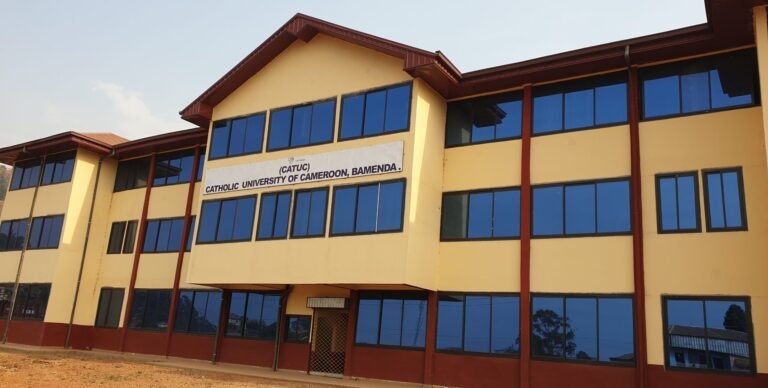
Address: BIG MANKON, BAMENDA, CAMEROON, | Email: info@catuc.org

SPECIALTY : Petroleum Engineering
DURATION : 4 years (8 Semesters)
DEGREE IN VIEW : Bachelor of Engineering (B.Eng.)
SCHOOL : School of Engineering (SENG)
Petroleum Engineering students may enhance their academic preparation for the growing opportunities in the related industries by pursuing a selection of courses with a petroleum emphasis.
Energy is a key component to people’s everyday lives; and a secure energy future requires a balance between environmental impact and affordable supply. Petroleum and geosystems engineers are able to address and solve important issues that will lead to energy security and thus are in high demand.
Economic and environmentally safe production of petroleum resources requires creative application of a wide spectrum of knowledge, including, but not limited to:
Petroleum engineering overlaps with many of the engineering disciplines, such as: mechanical, chemical, and civil.
The primary goals of the program are to produce highly qualified students each year, placing these students in entry-level industry positions or graduate program, and to maintain an accredited program in petroleum engineering.
If we are to reach these goals, we believe we must give our students the best possible preparation to enter this industry. Our curriculum gives every student a solid foundation in petroleum engineering fundamentals, but we also insist on experience in the industry. As a result, our graduates will enter the industry ready to be productive contributors, but they also will understand the need to continue to learn and improve their skills throughout their careers.
In order to meet our Mission and Vision, PENG graduates must have:
The curriculum in petroleum engineering is intended to prepare students for the petroleum industry and other fields which involve fluid flow through subsurface formations and particularly for those professions which have to do with drilling, production, reservoir engineering and transportation of oil, gas, and other subsurface resources.
The four-year curriculum in petroleum engineering includes sufficient training in basic engineering sciences to prepare the graduate for the application of engineering principles to the petroleum industry. Courses in geology give an understanding of the geological structures and conditions favorable for petroleum deposits. To the basic subjects are added courses in petroleum engineering which illustrate the application of the engineering principles to the type of problems and solution methods used in the petroleum industry.
A minimum of one semester (16 weeks) of approved experience in oilfield operation is required for registration in senior petroleum engineering courses.
Graduates of this program will:
Petroleum engineers increasingly use advanced computers, not only in analysis of exploration data and simulation of reservoir behaviour, but also in automation of oilfield production and drilling operations. Petroleum companies own many of the world’s supercomputers.
Petroleum engineers have a future full of challenges and opportunities. They must develop and apply new technology to recover hydrocarbons from oil shale, tar sands, and offshore oil and gas fields. They must also devise new techniques to recover oil left in the ground after application of conventional producing techniques.
Since many petroleum companies conduct worldwide operations, the petroleum engineer may have the opportunity for assignments all over the world. Petroleum engineers must solve the variety of technological, political, and economic problems encountered in these assignments. These exciting technological challenges combine to offer the petroleum engineer a most rewarding career.
The tuition fee per year is 683,500 FCFA for Cameroonians . To read more about fees click here.